
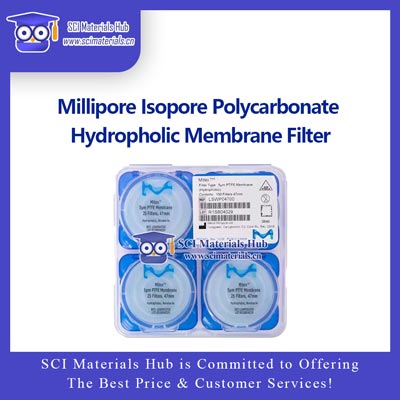
Millipore Isopore™ polycarbonate (PC) hydrophilic membranes are track-etched screen filters made from polycarbonate film. They are specifically designed for analytical applications where particles are retained on the membrane surface for direct observation, such as airborne particle analysis, particle counting, fluorescence microscopy, chemotaxis assays, microplastic analysis, and microbiological testing. The Isopore™ membrane features a smooth, glass-like surface that minimizes background interference and enhances microscopic imaging clarity. According to manufacturer specifications, the manufacturing process ensures precise pore sizes and a narrow pore size distribution, making these membranes suitable for size-based separation and analysis of particles.
Millipore® and Sigma-Aldrich® are key brands within the Life Science business of Merck KGaA, Darmstadt, Germany. As an authorized distributor collaborating with Merck Sigma-Aldrich, the Science Materials Station offers comprehensive product selection support, catalog number verification, and ordering services for research, testing, environmental monitoring, materials analysis, and industrial quality control applications. Merck's official website also lists Millipore®, Sigma-Aldrich®, SAFC®, Supelco®, and Milli-Q® as part of its Life Science brand portfolio.
| Feature | Description |
|---|---|
| Surface Retention for Easy Observation | The screen filter structure retains particles primarily on the membrane surface, making it ideal for microscopic counting, particle morphology analysis, and contaminant observation. |
| Low Background, Minimal Staining | Isopore™ membranes exhibit low staining affinity, reducing background interference and enabling clear surface observation of particles, cells, and microplastics. |
| Hydrophilic for Aqueous Samples | The hydrophilic polycarbonate membrane is well-suited for aqueous samples, buffers, microbial testing fluids, and various environmental samples. |
| Translucent for Transmitted Light Microscopy | The translucent material generally requires no clearing treatment for transmitted light microscopy; brown variants are also available for specific applications. |
| Non-Hygroscopic, Quick Drying | The non-hygroscopic nature facilitates rapid drying, reducing sample analysis waiting time. |
| Wide Pore Size Range | The series covers pore sizes from 0.1 to 10 μm, accommodating fine particles, microorganisms, cell migration studies, airborne particles, and microplastics at different scales. |
| Parameter | Millipore Isopore™ Polycarbonate (PC) Hydrophilic Membrane |
|---|---|
| Brand | Millipore / Isopore™ |
| Material | Polycarbonate (PC) |
| Membrane Type | Track-etched screen filter |
| Wettability | Hydrophilic |
| Pore Size Range | 0.1–10 μm |
| Thickness | 21–27 μm |
| Porosity | 5–10% (varies by pore size) |
| Refractive Index | 1.6 |
| Water Flow Rate | 0.5–250 mL/min/cm² at 10 psi |
| Air Flow Rate | 1.3–72 L/min/cm² at 10 psi |
| Maximum Operating Temperature | 140 °C max (flow rates may decrease after high-temperature sterilization) |
| Sterilization Methods | Autoclaving, ethylene oxide (EtO), gamma irradiation |
| Surface Color | White, Brown |
| Typical Applications | Particle analysis, air monitoring, microscopy, cell migration/chemotaxis assays, fluorescence analysis, size-based fractionation of cells and particles |
| Available Formats | Membrane discs, Millicell® plates/inserts, MultiScreen® plates, and other related consumables |
Note: The above general specifications are sourced from the Merck/Sigma-Aldrich Microfiltration Guide and Isopore™ product literature. Specific parameters for individual pore sizes, diameters, colors, and packaging configurations should be verified against the corresponding product catalog pages and COA/COQ documents.
| Pore Size | Common Catalog Series | Color/Type | Recommended Applications |
|---|---|---|---|
| 0.22 μm | GTTP | White hydrophilic PC membrane | Fine particle retention, bacteria-related sample filtration, fine particle analysis |
| 0.4 μm | HTTP / HTBP | HTTP: white; HTBP: brown | Microbiological testing, drinking water microbial analysis, air/particle monitoring, microplastic analysis |
| 0.8 μm | ATTP | White hydrophilic PC membrane | Large particle retention, airborne particles, cell sample pre-fractionation |
| 1.2 μm | RTTP | White hydrophilic PC membrane | Particle analysis, cell migration, larger suspended particle fractionation |
| 2.0 μm | TTTP | White hydrophilic PC membrane | Cell/particle size separation, surface observation of particles |
| 3.0 μm | TSTP | White hydrophilic PC membrane | Particle collection, air monitoring, cell migration assays |
| 5.0 μm | TMTP | White hydrophilic PC membrane | Larger particles, cell migration, chemotaxis assays, size fractionation |
| 10.0 μm | TCTP | White hydrophilic PC membrane | Large particle fractionation, cell/particle screening, sample pretreatment |
Common specifications such as HTTP04700, GTTP02500, GTTP04700, TSTP02500, TMTP02500, TCTP04700, RTTP04700, TTTP04700, and ATTP04700 are available in the Sigma-Aldrich product listing. Porosity, diameter, and pack sizes vary by catalog number.
Isopore™ membranes are suitable for collecting airborne pollutants and particles for subsequent microscopic examination. Because particles are primarily retained on the membrane surface, samples are not obscured by the membrane's internal structure, facilitating analysis of particle count, morphology, size, and distribution. The manufacturer explicitly lists Air Monitoring as a key application for Isopore™ membranes.
With low background fluorescence and a smooth surface, Isopore™ membranes are ideal for fluorescence microscopy, transmitted light microscopy, and electron microscopy. For applications requiring direct observation of filtered samples on the membrane surface—such as particles, microplastics, and cell migration samples—Isopore™ provides clearer images compared to many depth-type filter membranes.
Isopore™ membranes are listed by the manufacturer as suitable for Chemotaxis Assays. Their narrow pore size distribution, well-defined pore structure, and thin-film characteristics enable precise control over pore size, channel geometry, and migratory behavior in cell migration experiments.
The 0.4 μm Isopore polycarbonate membrane is used for general microbiological analysis in pharmaceutical, water monitoring, clinical laboratories, food and beverage, industrial quality control, and environmental samples. The Microfil® with Isopore product page also lists bioburden testing, clinical, environmental, food and beverages, industrial QC, pharmaceutical, and water monitoring as relevant applications.
The 0.4 μm Isopore product literature cites applications including microplastics analysis, particle monitoring, air monitoring, and drinking water microbes analysis. For microplastics, sediment eluates, drinking water, and environmental water samples, the low background and surface retention characteristics of PC membranes facilitate subsequent microscopic identification.
| Experimental Objective | Recommended Selection Logic |
|---|---|
| Fine particle or microorganism retention | Choose 0.22 μm or 0.4 μm, suitable for fine particles, microorganisms, and aqueous samples. |
| Airborne particle observation | Select 0.4–5.0 μm based on target particle size; prioritize clarity for subsequent microscopic observation. |
| Cell migration/chemotaxis assays | Choose larger pore sizes such as 3.0, 5.0, or 8.0/10.0 μm based on cell size and migration model. |
| Microplastic analysis | Select 0.4, 0.8, 1.2, 2.0 μm or larger based on target microplastic size; avoid excessively fine pores that may cause membrane clogging. |
| Low-background observation | Prefer white or brown Isopore™ membranes, with the final choice determined by microscopy method and contrast requirements. |
| Step | Description |
|---|---|
| Step 1: Confirm Specifications | Verify pore size, diameter, color, and sterilization requirements based on sample type, target particle size, filtration volume, and subsequent observation method. |
| Step 2: Install the Membrane | Use clean forceps to place the membrane flat into the filter holder or funnel, avoiding folds, scratches, or lifted edges. |
| Step 3: Pre-wet the Membrane | For aqueous samples, pre-wet the membrane with purified water, buffer, or the target solvent to reduce initial resistance and minimize air bubbles. |
| Step 4: Filter the Sample | Use vacuum filtration, positive-pressure filtration, or compatible apparatus; apply pressure gradually to avoid sudden high pressure that may deform the membrane or disperse the sample. |
| Step 5: Rinse Residuals | Rinse the funnel wall and membrane surface edges with a small volume of purified water or buffer to ensure particles are concentrated in the effective filtration area. |
| Step 6: Dry or Stain | For microscopic observation, allow the membrane to air-dry, oven-dry, stain, or observe wet as per protocol requirements. The non-hygroscopic nature of Isopore™ facilitates rapid drying. |
| Step 7: Microscopic Analysis | Transfer the membrane to a glass slide, sample stage, or electron microscopy stub for counting, imaging, morphology observation, or subsequent spectroscopic analysis. |
| Precautions | Description |
|---|---|
| Avoid Mechanical Damage | PC membranes are thin; avoid scratching the effective filtration area with forceps tips. |
| Avoid Overloading/Clogging | For samples with high particle concentrations, dilute or pre-filter first to prevent flow rate reduction and uneven particle distribution. |
| Control Filtration Pressure | Excessive pressure may cause flow rate changes, membrane deformation, or particle breakthrough. |
| Verify Flow Rate After Sterilization | Manufacturer notes that while Isopore™ can be autoclaved, EtO-sterilized, or gamma-irradiated, autoclaving may reduce flow rates. |
| Confirm Solvent Compatibility | General literature indicates Isopore™ is compatible with both aqueous and organic solvents; however, for specific solvents, temperatures, contact times, and quantitative work, consult the SDS, chemical compatibility tables, and relevant catalog specifications. |
| Parameter | Isopore™ PC Hydrophilic Membrane | MCE Mixed Cellulose Ester Membrane | PVDF Hydrophilic Membrane | PTFE Hydrophilic Membrane |
|---|---|---|---|---|
| Structural Characteristics | Track-etched screen filter, narrow pore size distribution | Porous network structure, commonly used for microbiology | Low protein binding, commonly used for biological sample clarification | Broad chemical compatibility, suitable for complex solvent systems |
| Particle Observation | Excellent; particles retained on surface | Moderate; background and membrane structure may interfere | Moderate; more suited for clarification filtration | Application-dependent |
| Microscopy Suitability | Highly suitable | Acceptable but with more complex background | Not the primary choice | Application-dependent |
| Flow Rate/Throughput | Moderate, affected by porosity | Generally higher | Generally higher | Varies widely |
| Typical Applications | Particle counting, air monitoring, fluorescence microscopy, chemotaxis, microplastics | Microbiological testing, water filtration, general particle retention | Protein samples, media, biological fluid clarification | Organic solvents, acids/bases, chemical filtration |
| Selection Advice | Preferred when surface observation and particle counting are required | Common choice for routine microbiological filtration | Consider for protein or biological sample processing | Evaluate first for aggressive solvents or corrosive systems |
Q1: What types of experiments are Isopore™ PC hydrophilic membranes best suited for?
A: They are best suited for experiments requiring direct observation of the membrane surface after filtration, such as airborne particle analysis, particle counting, microplastic analysis, fluorescence microscopy, chemotaxis assays, cell migration studies, and certain microbiological tests. The manufacturer also lists Air Monitoring, Epifluorescent Microscopy, and Chemotaxis Assays as typical applications.
Q2: What is the main difference between Isopore™ and conventional MCE membranes?
A: Isopore™ membranes are track-etched polycarbonate screen filters with a narrower pore size distribution, and particles are retained primarily on the surface. MCE membranes typically have a porous network structure and are more suited for general filtration and microbial retention. For microscopic counting, particle morphology observation, and low-background analysis, Isopore™ offers distinct advantages.
Q3: Can Isopore™ membranes be autoclaved?
A: Yes. Sigma-Aldrich product Q&A indicates that Isopore™ membranes can be sterilized by autoclaving at 121 °C and 1 bar, as well as by EtO or gamma irradiation. However, autoclaving may reduce flow rates.
Q4: Are Isopore™ membranes sterile?
A: Most Isopore™ membrane discs are supplied non-sterile; sterility depends on the specific catalog number. The Microfil® with Isopore 0.4 μm product page indicates its sterility as non-sterile. If sterility is required, select sterile-packaged formats or sterilize according to protocol requirements.
Q5: How do I choose between white and brown Isopore™ membranes?
A: White membranes are suitable for most routine particle observation, transmitted light microscopy, and general experiments. Brown membranes are intended for applications requiring enhanced background contrast or specific microscopic observation conditions. Manufacturer literature notes that Isopore™ translucent materials generally do not require clearing treatment, and brown variants are also available.
Q6: Do Isopore™ membranes require weight matching?
A: Typically not. Manufacturer documentation indicates that due to relatively low and consistent tar and ash content, weight-matched membranes are generally not required.
Q7: Can Isopore™ membranes be used with organic solvents?
A: General literature indicates Isopore™ is compatible with both aqueous and organic solvents. However, polycarbonate resistance to different organic solvents varies. For aggressive solvents, prolonged exposure, elevated temperatures, or quantitative analysis, consult the SDS, chemical compatibility charts, and specific catalog specifications.
Q8: Why is particle distribution uneven after filtration?
A: Common causes include excessive filtration pressure, high sample concentration, improper membrane installation, residual sample on the funnel wall not rinsed off, air bubbles, or particle aggregation. Recommendations include reducing pressure, diluting the sample, mixing thoroughly, and rinsing the filter funnel wall with a small volume of purified water or buffer.
Q9: What pore size should I choose for microplastic analysis?
A: Select the pore size based on the target microplastic particle size. For smaller particles, choose 0.4 μm or 0.8 μm. For samples with high particle concentration or larger target particles, choose 1.2, 2.0, 3.0, or 5.0 μm to reduce clogging and improve filtration efficiency. The 0.4 μm Isopore™ product literature explicitly lists microplastics analysis as a relevant application.
Q10: How can I obtain a COA or COQ?
A: Sigma-Aldrich product pages provide access to Certificates of Analysis and Certificates of Quality, which can be retrieved by searching for the product batch/lot number.
📧 Email: contact@scimaterials.cn
📞 WhatsApp & Tel: +86 153-7569-8751
🔗 Place quick orders on our eBay / Amazon / Alibaba stores.
🌐 We ship worldwide via DHL, FedEx, UPS, SF-Express, or other requested carriers.
📦 Bulk quantities with discount available upon request.
💳 Payment methods accepted: Bank Wire Transfer, PayPal, Credit Card (via Taobao), Alipay, WeChat Pay
Pore Size Range: 0.1μm – 10μm
| Model / Pore Size | Φ13mm, 100/pk | Φ25mm, 100/pk | Φ37mm, 100/pk | Φ47mm, 100/pk | Φ90mm, 30/pk | Φ142mm, 50/pk |
|---|---|---|---|---|---|---|
| VCTP / 0.1μm | VCTP01300 $325 | VCTP02500 $352 | — | VCTP04700 $680 | — | VCTP14250 $1,677 |
| GTTP / 0.2μm | GTTP01300 $200 | GTTP02500 $239 | — | GTTP04700 $364 | GTTP09030 $346 | GTTP14250 $970 |
| GTBP / 0.22μm | GTBP01300 $276 | GTBP02500 $614 | — | GTBP04700 $1,366 | — | — |
| HTTP / 0.4μm | HTTP01300 $200 | HTTP02500 $239 | HTTP03700 $322 | HTTP04700 $436 | HTTP09030 $367 | HTTP14250 $1,059 |
| DTTP / 0.6μm | DTTP01300 $231 | DTTP02500 $246 | — | DTTP04700 $382 | — | — |
| ATTP / 0.8μm | ATTP01300 $231 | ATTP02500 $246 | ATTP03700 $325 | ATTP04700 $382 | — | ATTP14250 $1,056 |
| Model / Pore Size | Φ13mm, 100/pk | Φ25mm, 100/pk | Φ37mm, 100/pk | Φ47mm, 100/pk | Φ90mm, 30/pk | Φ142mm, 50/pk |
|---|---|---|---|---|---|---|
| RTTP / 1.2μm | RTTP01300 $231 | RTTP02500 $246 | — | RTTP04700 $382 | — | RTTP14250 $1,310 |
| TTTP / 2μm | — | TTTP02500 $246 | — | TTTP04700 $382 | — | — |
| TSTP / 3μm | TSTP01300 $231 | TSTP02500 $246 | — | TSTP04700 $382 | — | TSTP14250 $1,134 |
| TMTP / 5μm | TMTP01300 $231 | TMTP02500 $246 | — | TMTP04700 $382 | TMTP09030 $501 | TMTP14250 $1,057 |
| TETP / 8μm | TETP01300 $266 | TETP02500 $235 | — | TETP04700 $474 | — | — |
| TCTP / 10μm | TCTP01300 $231 | TCTP02500 $246 | — | TCTP04700 $382 | — | TCTP14250 $1,134 |
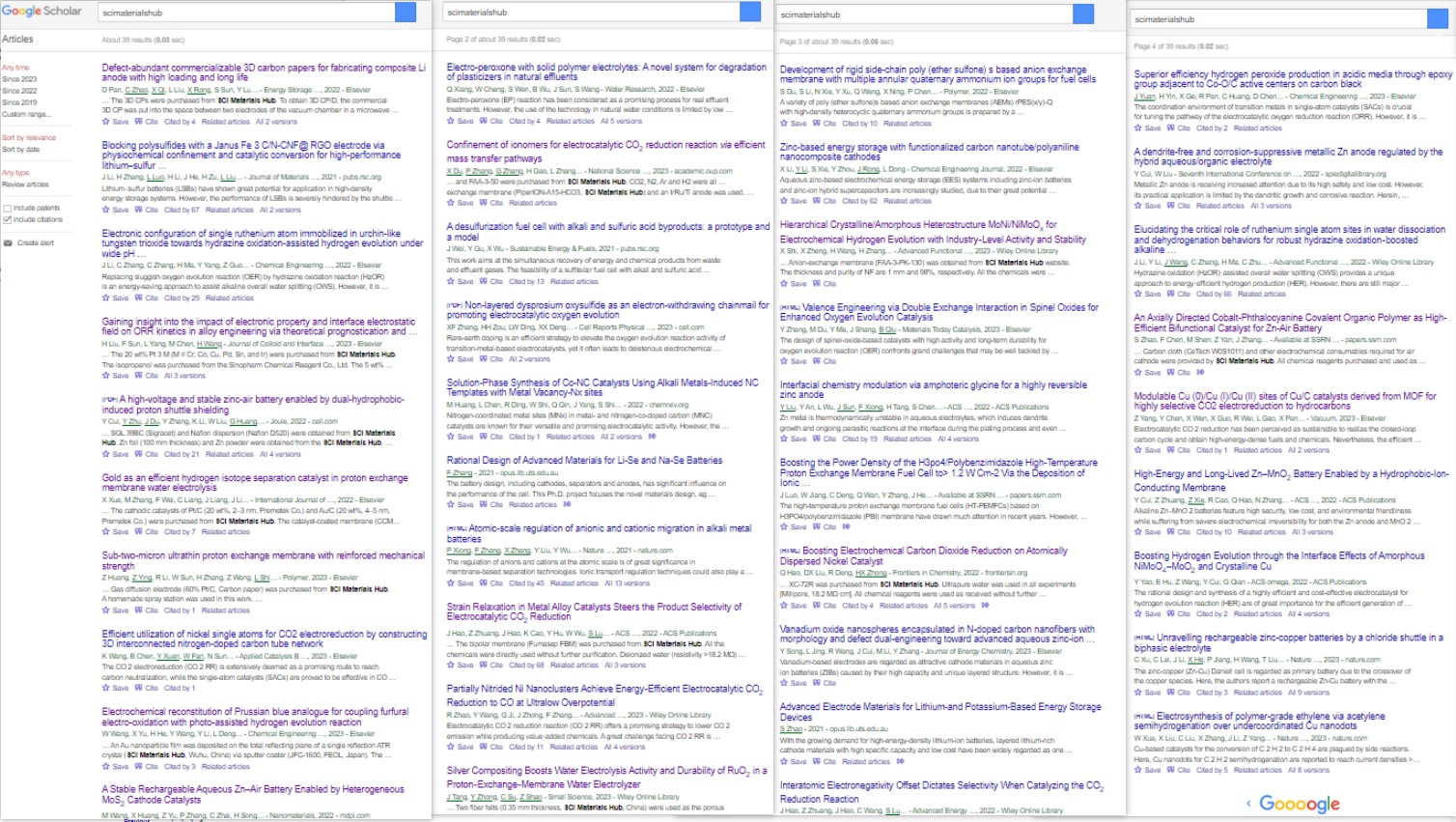
Partial references citing our materials (from Google Scholar)
Carbon Dioxide Reduction
1. ACS Nano Strain Relaxation in Metal Alloy Catalysts Steers the Product Selectivity of Electrocatalytic CO2 Reduction
The bipolar membrane (Fumasep FBM) in this paper was purchased from SCI Materials Hub, which was used in rechargeable Zn-CO2 battery tests. The authors reported a strain relaxation strategy to determine lattice strains in bimetal MNi alloys (M = Pd, Ag, and Au) and realized an outstanding CO2-to-CO Faradaic efficiency of 96.6% with outstanding activity and durability toward a Zn-CO2 battery.
2. Front. Chem. Boosting Electrochemical Carbon Dioxide Reduction on Atomically Dispersed Nickel Catalyst
In this paper, Vulcan XC-72R was purchased from SCI Materials Hub. Vulcan XC 72R carbon is the most common catalyst support used in the anode and cathode electrodes of Polymer Electrolyte Membrane Fuel Cells (PEMFC), Direct Methanol Fuel Cells (DMFC), Alkaline Fuel Cells (AFC), Microbial Fuel Cells (MFC), Phosphoric Acid Fuel Cells (PAFC), and many more!
3. Adv. Mater. Partially Nitrided Ni Nanoclusters Achieve Energy-Efficient Electrocatalytic CO2 Reduction to CO at Ultralow Overpotential
An AEM membrane (Sustainion X37-50 Grade RT, purchased from SCI Materials Hub) was activated in 1 M KOH for 24 h, washed with ultra-purity water prior to use.
4. Adv. Funct. Mater. Nanoconfined Molecular Catalysts in Integrated Gas Diffusion Electrodes for High-Current-Density CO2 Electroreduction
In this paper (Supporting Information), an anion exchanged membrane (Fumasep FAB-PK-130 obtained from SCI Materials Hub (www.scimaterials.cn)) was used to separate the catholyte and anolyte chambers.
SCI Materials Hub: we also recommend our Fumasep FAB-PK-75 for the use in a flow cell.
5. Appl. Catal. B Efficient utilization of nickel single atoms for CO2 electroreduction by constructing 3D interconnected nitrogen-doped carbon tube network
In this paper, the Nafion 117 membrane was obtained from SCI Materials Hub.
In this paper, Proton exchange membrane (Nafion 117), Nafion D520, and Toray 060 carbon paper were purchased from SCI Materials Hub.
7. National Science Review Confinement of ionomer for electrocatalytic CO2 reduction reaction via efficient mass transfer pathways
An anion exchange membrane (PiperION-A15-HCO3) was obtained from SCI Materials Hub.
8. Catalysis Communications Facilitating CO2 electroreduction to C2H4 through facile regulating {100} & {111} grain boundary of Cu2O
Carbon paper (TGPH060), membrane solution (Nafion D520), and ionic membrane (Nafion N117) were obtained from Wuhu Eryi Material Technology Co., Ltd (a company under SCI Materials Hub).
Batteries
1. J. Mater. Chem. A Blocking polysulfides with a Janus Fe3C/N-CNF@RGO electrode via physiochemical confinement and catalytic conversion for high-performance lithium–sulfur batteries
Graphene oxide (GO) in this paper was obtained from SCI Materials Hub. The authors introduced a Janus Fe3C/N-CNF@RGO electrode consisting of 1D Fe3C decorated N-doped carbon nanofibers (Fe3C/N-CNFs) side and 2D reduced graphene oxide (RGO) side as the free-standing carrier of Li2S6 catholyte to improve the overall electrochemical performance of Li-S batteries.
This paper used more than 10 kinds of materials from SCI Materials Hub and the authors gave detailed properity comparsion.
The commercial IEMs of Fumasep FAB-PK-130 and Nafion N117 were obtained from SCI Materials Hub.
Gas diffusion layers of GDL340 (CeTech) and SGL39BC (Sigracet) and Nafion dispersion (Nafion D520) were obtained from SCI Materials Hub.
Zn foil (100 mm thickness) and Zn powder were obtained from the SCI Materials Hub.
Commercial 20% Pt/C, 40% Pt/C and IrO2 catalysts were also obtained from SCI Materials Hub.
3. Journal of Energy Chemistry Vanadium oxide nanospheres encapsulated in N-doped carbon nanofibers with morphology and defect dual-engineering toward advanced aqueous zinc-ion batteries
In this paper, carbon cloth (W0S1011) was obtained from SCI Materials Hub. The flexible carbon cloth matrix guaranteed the stabilization of the electrode and improved the conductivity of the cathode.
4. Energy Storage Materials Defect-abundant commercializable 3D carbon papers for fabricating composite Li anode with high loading and long life
The 3D carbon paper (TGPH060 raw paper) were purchased from SCI Materials Hub.
5. Nanomaterials A Stable Rechargeable Aqueous Zn–Air Battery Enabled by Heterogeneous MoS2 Cathode Catalysts
Nafion D520 (5 wt%), and carbon paper (GDL340) were received from SCI-Materials-Hub.
Carbon cloth (W0S1011) and other electrochemical consumables required for air cathode were provided by SCI Materials Hub.
Oxygen Reduction Reaction
1. J. Chem. Eng. Superior Efficiency Hydrogen Peroxide Production in Acidic Media through Epoxy Group Adjacent to Co-O/C Active Centers on Carbon Black
In this paper, Vulcan XC 72 carbon black, ion membrane (Nafion N115, 127 μL), Nafion solution (D520, 5 wt%), and carbon paper (AvCarb GDS 2230 and Spectracarb 2050A-1050) were purchased from SCI Materials Hub.
2. Journal of Colloid and Interface Science Gaining insight into the impact of electronic property and interface electrostatic field on ORR kinetics in alloy engineering via theoretical prognostication and experimental validation
The 20 wt% Pt3M (M = Cr, Co, Cu, Pd, Sn, and Ir) were purchased from SCI Materials Hub. This work places emphasis on the kinetics of the ORR concerning Pt3M (M = Cr, Co, Cu, Pd, Sn, and Ir) catalysts, and integrates theoretical prognostication and experimental validation to illuminate the fundamental principles of alloy engineering.
Water Electrolysis
1. International Journal of Hydrogen Energy Gold as an efficient hydrogen isotope separation catalyst in proton exchange membrane water electrolysis
The cathodic catalysts of Pt/C (20 wt%, 2–3 nm) and Au/C (20 wt%, 4–5 nm) were purchased from SCI Materials Hub.
2. Small Science Silver Compositing Boosts Water Electrolysis Activity and Durability of RuO2 in a Proton-Exchange-Membrane Water Electrolyzer
Two fiber felts (0.35 mm thickness, SCI Materials Hub) were used as the porous transport layers at both the cathode and the anode.
3. Advanced Functional Materials Hierarchical Crystalline/Amorphous Heterostructure MoNi/NiMoOx for Electrochemical Hydrogen Evolution with Industry-Level Activity and Stability
Anion-exchange membrane (FAA-3-PK-130) was obtained from SCI Materials Hub website.
Fuel Cells
1. Polymer Sub-two-micron ultrathin proton exchange membrane with reinforced mechanical strength
Gas diffusion electrode (60% Pt/C, Carbon paper) was purchased from SCI Materials Hub.
Characterization
1. Chemical Engineering Journal Electrochemical reconstitution of Prussian blue analogue for coupling furfural electro-oxidation with photo-assisted hydrogen evolution reaction
An Au nanoparticle film was deposited on the total reflecting plane of a single reflection ATR crystal (SCI Materials Hub, Wuhu, China) via sputter coater.

|
We Provide A Broad Range of Materials, Instruments & Solutions in Advanced Science and Technologies | About Us |